BOW ROCKERS
The Victorian favourite
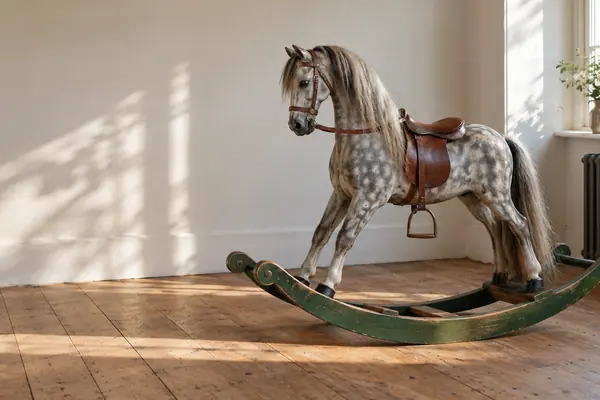
Rocking horses became a staple of the Victorian nursery, usually on two long curved bow rockers. They could travel and needed plenty of space.
Date a horse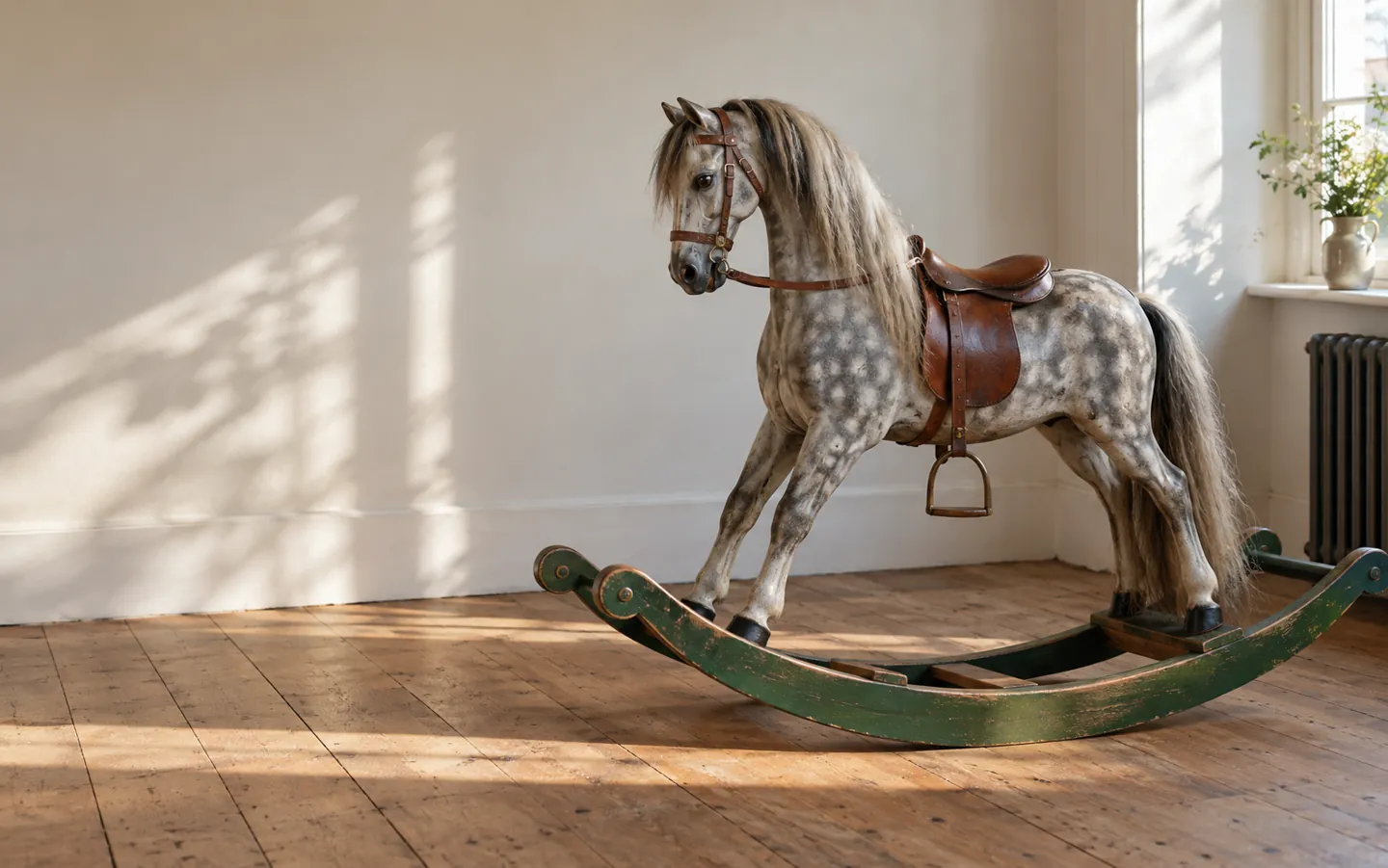
 doodlerocker
A NURSERY HISTORY
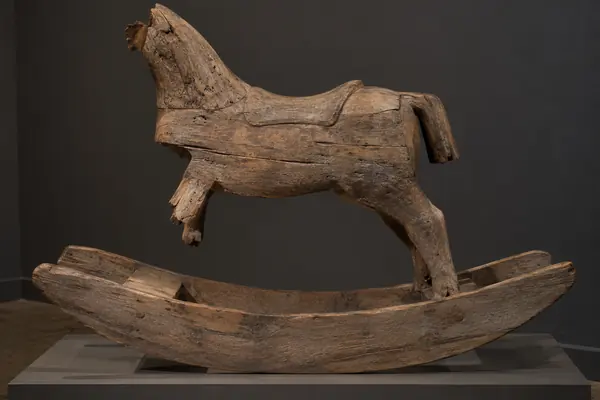
c. 1610 one of the oldest
Look underneath the horse.
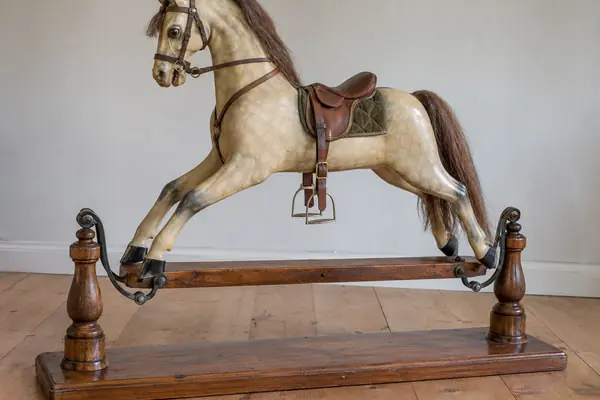
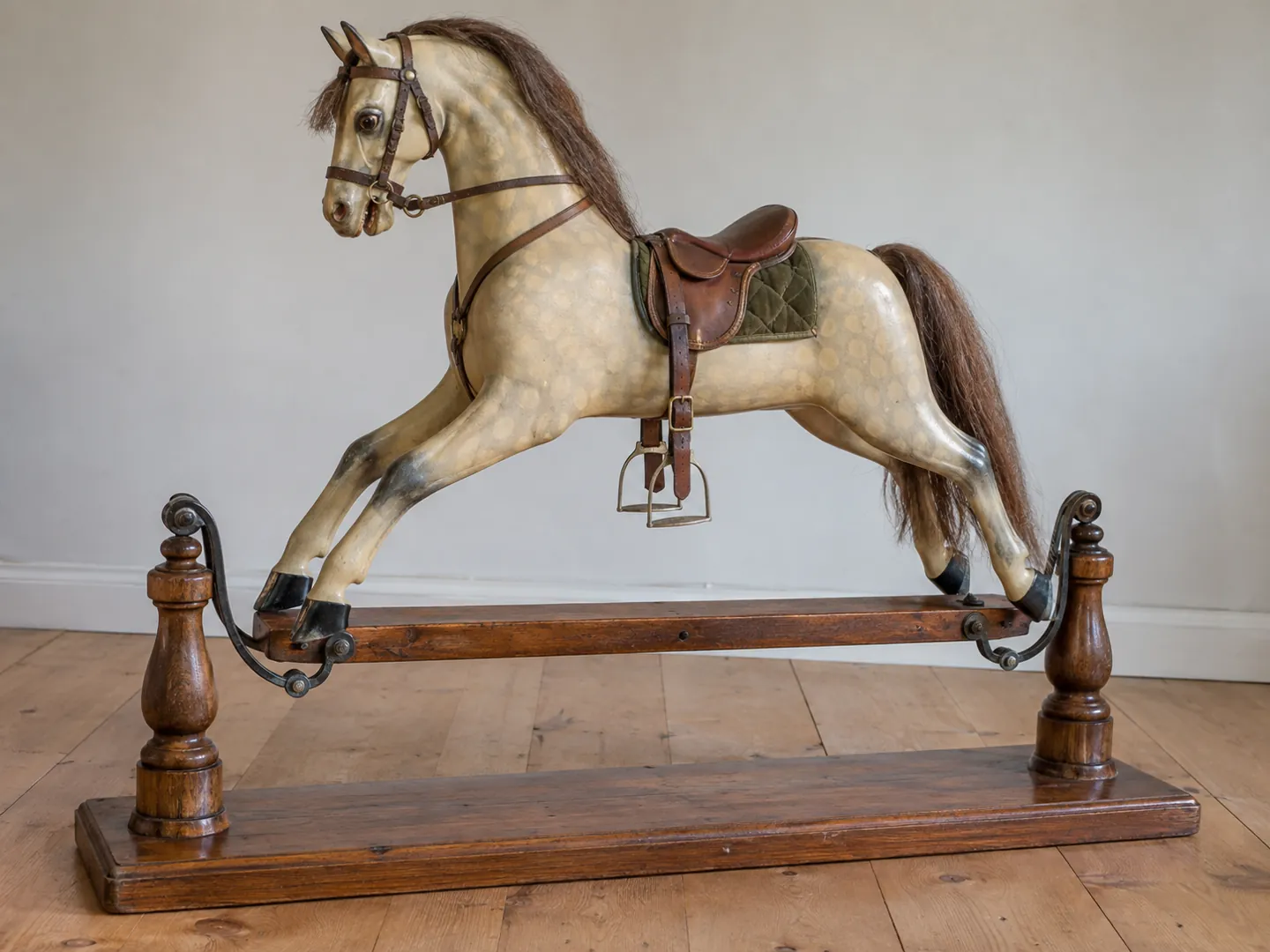
The rockers tell you most of a rocking horse’s story. Early ones sat on solid curved planks, Victorian ones on long bow rockers, and from 1880 many on a stand that let the horse swing without travelling across the floor.
Updated
Date a horseTHE SHORT ANSWER
Museums date rocking horses by how they are built.
The base under the horse is the first clue.
BOW ROCKERS
Rocking horses became a staple of the Victorian nursery, usually on two long curved bow rockers. They could travel and needed plenty of space.
Date a horseSAFETY STAND
In 1880 Philip Marqua of Cincinnati developed a horse on a ‘safety stand’ with a glider base, so it rocked while staying in the same place.
How to tellTHE OLDEST
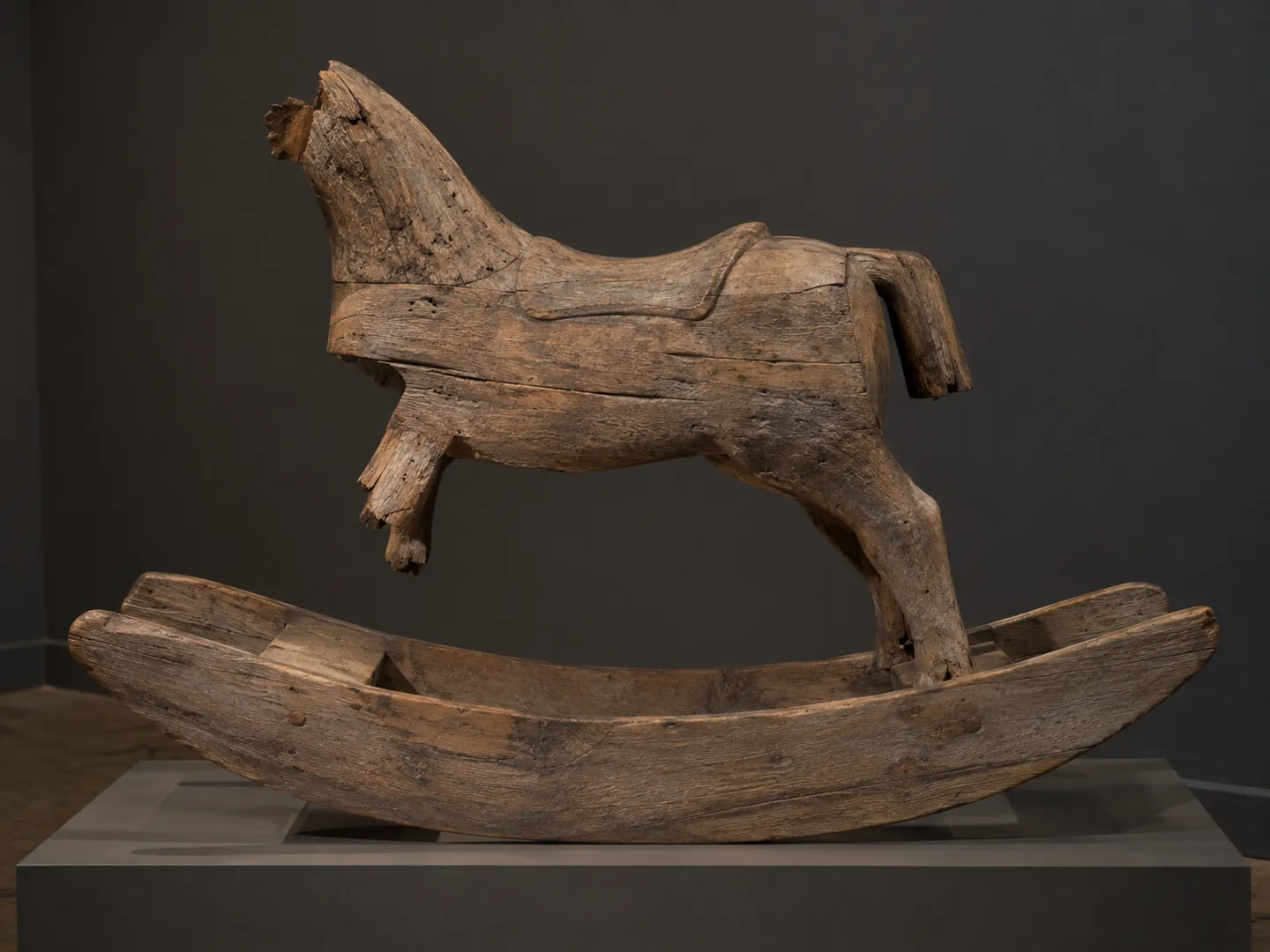
The V&A’s elm horse, made in England about 1610, is one of the oldest surviving. Its body is a single piece of elm on two D-shaped rockers.
See the numbersDATE A HORSE
Choose what you can see under the horse to find the matching examples in the V&A collection. The bar shows roughly how early that style appears.
Based on V&A collection records and the Armitt Museum. A general guide only: styles overlap and many horses have been restored.
TWO NUMBERS WORTH KNOWING
How far back the toy goes,
and what a carved horse once cost.
≈ 1610
Date of one of the oldest survivors
The V&A says its elm horse is one of the oldest surviving rocking horses in the world. A link to the young Charles I has been suggested but cannot be proved or disproved.
THE OLDEST · V&A
5 shillings
Price of a horse made around 1885
Boys in a London Boys’ Home on Regent’s Park Road carved horses from a single piece of wood and sold them for 5s. each, according to a 1974 newspaper report.
A BOYS’ HOME · V&A
Another V&A dapple grey, made in London by P Leach, was spotted discarded in an alley beside a fish and chip shop in Horncastle, Lincolnshire, and offered for £5.
FOUR THINGS TO CHECK
These are the details museum catalogues record, and they are the ones worth noting if you are looking at an old horse yourself.
Solid planks, long bow rockers or a stand with swing irons each point to a different period.
Carved from one piece, built from joined sections, or cut from flat planks.
Dapple grey paint, glass eyes and horsehair manes and tails recur in nineteenth-century examples.
Many horses have been restored, with new saddles or bridles, so original parts can be few.
BEFORE THE ROCKING HORSE
The Armitt Museum lists earlier relatives: rocking cradles, tilting seats used to practise medieval jousting, and hobby horses, a horse’s head on a stick. The rocking horse in its current form first appeared in the seventeenth century.
Most were built by individual craftsmen, so the toy was not industrialised until the late nineteenth century. Bow rockers had a drawback: rocked hard, the horse could move across the room, and children could fall or get caught under the runners.
Questions
The V&A holds an elm rocking horse made in England in about 1610, which it describes as one of the oldest surviving in the world.
It has been suggested, because he had difficulty walking as a child, but the V&A says there is no contemporary record and the link can probably never be proved or disproved.
Two long curved runners under the horse that let it rock back and forth. The Armitt Museum notes they took up space and could make the horse move about.
A fixed frame from which the horse swings, so it rocks without moving across the floor. The Armitt Museum credits Philip Marqua of Cincinnati with the design in 1880.
Many V&A nineteenth-century examples are painted dapple grey, with glass eyes and horsehair manes and tails, on bow rockers, including horses from 1800–1850, about 1840 and 1882–1891.
Sources
ABOUT THIS NAME
doodlerocker.com is part of the DoodleSale portfolio. It isn't in an auction right now, but you can ask about leasing it.